
Water leaks cause billions in property damage across the British Isles every year. Basement waterproofing means far more than keeping out an occasional puddle. For homeowners and building managers, understanding this protective process is vital for preventing costly repairs, mould problems, and even health risks. This guide reveals how modern waterproofing transforms property preservation, equipping you with practical knowledge to protect your investment against hidden water threats.
Table of Contents
- What Basement Waterproofing Means For Properties
- Key Types Of Basement Waterproofing Solutions
- How Waterproofing Safeguards Your Investment
- Common Problems Prevented By Waterproofing
- Financial Impact And Value Of Waterproof Basements
Key Takeaways
| Point | Details |
|---|---|
| Importance of Waterproofing | Basement waterproofing is essential for preserving property integrity and preventing moisture-related damage. It helps maintain structural longevity and protects investments from costly repairs. |
| Types of Solutions | Various waterproofing techniques, such as external barriers and sump pumps, offer tailored protection based on environmental conditions and structural needs. |
| Financial Benefits | Investing in waterproofing can significantly increase property value and reduce long-term repair costs while potentially lowering insurance premiums. |
| Preventative Measures | Effective waterproofing mitigates serious issues like mould growth and electrical hazards, ensuring a safe and healthy living environment while avoiding extensive damage. |
What Basement Waterproofing Means for Properties
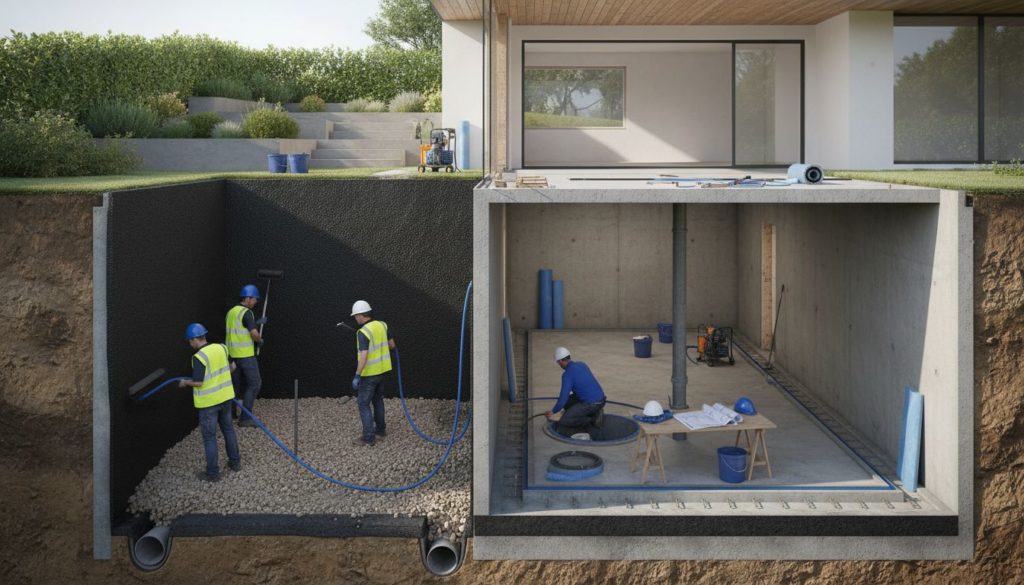
Basement waterproofing represents a comprehensive strategy for protecting subterranean property structures from moisture invasion and potential structural damage. As Wikipedia explains, traditional waterproofing methods have evolved from using bituminous paint and tar to incorporating advanced plastic membrane technologies that create robust moisture barriers.
At its core, basement waterproofing means creating multiple protective layers that prevent water penetration through foundation walls, floors, and connecting structural elements. These protective systems are designed to address various moisture entry points, including ground seepage, surface water runoff, and internal condensation challenges. Moisture management becomes critical in preserving property integrity, preventing potential structural weakening, mould growth, and long-term environmental degradation.
Effective basement waterproofing involves several strategic approaches. Property owners can implement different techniques depending on their specific environmental conditions and structural requirements:
- External membrane barriers that coat foundation walls
- Interior drainage systems to redirect potential water infiltration
- Sump pump installations for active water management
- Crack repair techniques to seal potential entry points
- Landscape grading to improve water runoff away from structures
Through comprehensive understanding why basement waterproofing is crucial, property owners can protect their investments from potentially catastrophic water damage, ensuring structural longevity and maintaining optimal property conditions.
Key Types of Basement Waterproofing Solutions
Basement waterproofing encompasses several sophisticated techniques designed to protect subterranean structures from moisture intrusion. Sephaku Cement highlights multiple solutions including cementitious coatings, liquid waterproofing membranes, bituminous coatings, bituminous membranes, and polyurethane waterproofing, each offering unique characteristics for different structural requirements.
These waterproofing solutions are strategically engineered to address varying moisture challenges. External application methods focus on creating impenetrable barriers that prevent water penetration, while internal solutions concentrate on managing potential moisture buildup. The selection of an appropriate waterproofing technique depends on multiple factors, including soil composition, groundwater levels, structural design, and potential environmental stressors.
Comprehensive basement waterproofing typically involves multiple complementary approaches:
- Cementitious waterproofing for rigid, permanent sealing
- Liquid-applied membranes providing flexible protection
- Bituminous coating systems offering robust moisture resistance
- Polyurethane-based solutions for complex structural configurations
- Drainage membrane installations to redirect potential water infiltration
For property owners seeking comprehensive moisture management strategies, basement waterproofing solutions guide provides in-depth insights into selecting the most appropriate protective techniques for specific environmental conditions and structural requirements.
How Waterproofing Safeguards Your Investment
Protecting your property investment requires strategic defence against potential moisture-related damages that can dramatically reduce structural integrity and market value. When water penetrates building foundations, it initiates a cascade of destructive processes that can compromise entire property structures, leading to substantial financial losses that far exceed initial waterproofing costs.
Waterproofing serves as a critical financial shield, preventing moisture-induced deterioration across multiple property dimensions. Structural components like foundations, walls, and floors become vulnerable to progressive damage when exposed to consistent water infiltration. This moisture can trigger severe consequences including foundation cracking, concrete degradation, steel reinforcement corrosion, and progressive structural weakening that exponentially increases repair expenses over time.
The financial protection offered by comprehensive waterproofing extends across several key investment preservation strategies:
- Structural integrity maintenance preventing foundational damage
- Property value preservation by avoiding moisture-related deterioration
- Reducing long-term repair costs through proactive protection
- Preventing mould and mildew growth that can cause health issues
- Protecting interior finishes and decorative elements from water damage
For property owners seeking deeper insights into protecting their most significant asset, understanding why waterproof your home matters provides comprehensive guidance on making informed waterproofing decisions that safeguard both structural and financial interests.
Common Problems Prevented by Waterproofing
ProCompare highlights that waterproofing is a critical preventative measure addressing multiple potential structural and environmental challenges. By implementing comprehensive moisture protection strategies, property owners can effectively mitigate a range of destructive problems that threaten building integrity and occupant health.
The spectrum of issues prevented by professional waterproofing extends far beyond simple moisture management. Uncontrolled water infiltration can trigger catastrophic damage mechanisms that progressively compromise structural components, electrical systems, and interior environments. These potential problems include foundation destabilisation, accelerated material degradation, electrical hazard development, and the creation of environments conducive to harmful biological growth.
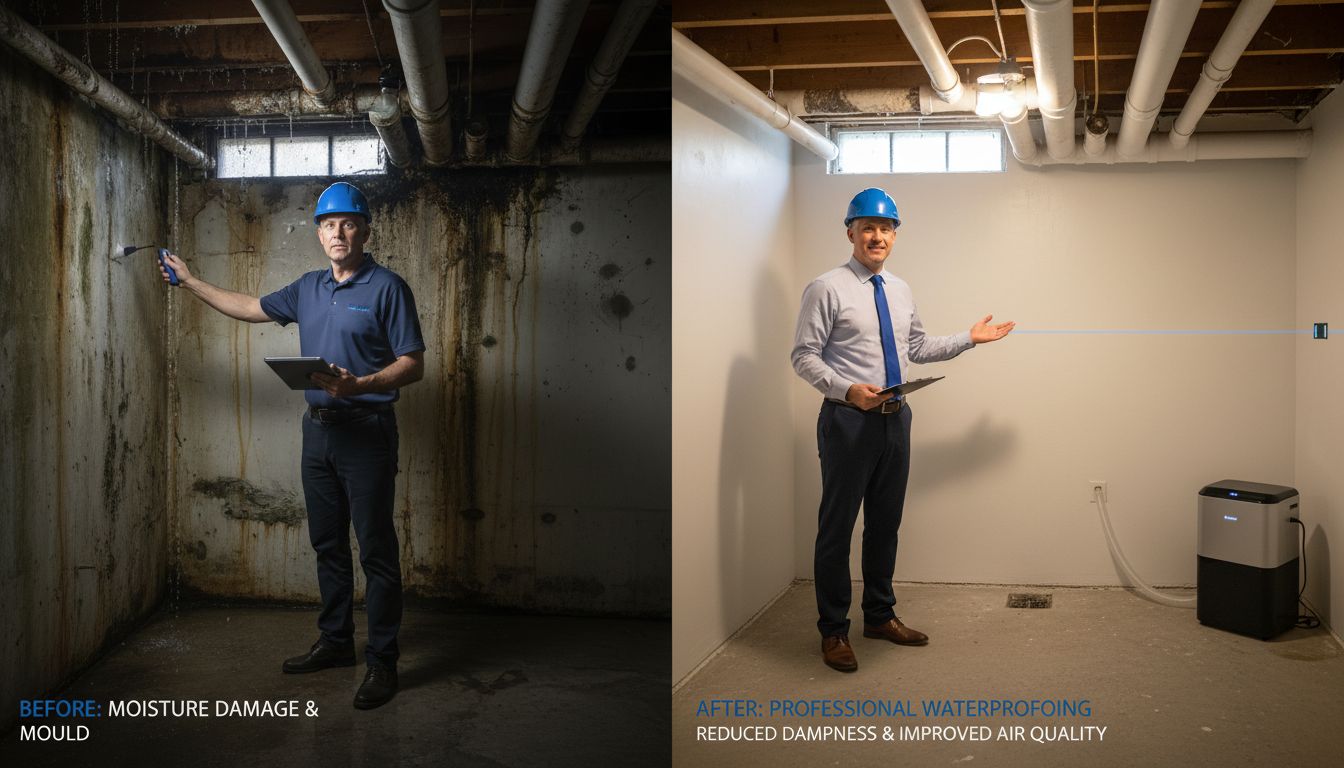
Specifically, waterproofing prevents several critical problems:
- Structural foundation weakening through moisture-induced concrete deterioration
- Mould and mildew proliferation that damages surfaces and threatens health
- Electrical system corrosion risking potential short-circuits and fire hazards
- Basement flooding that can destroy valuable possessions and infrastructure
- Indoor air quality degradation caused by persistent dampness
Property owners seeking deeper understanding of potential moisture-related risks can explore waterproofing failures explained to comprehend the comprehensive protective role of professional waterproofing solutions.
Financial Impact and Value of Waterproof Basements
Thirtyone highlights that basement waterproofing represents a strategic financial investment with significant long-term economic advantages. While initial waterproofing costs might seem substantial, the potential savings from preventing moisture-related structural damage far outweigh the upfront expenditure, making it a critically important property preservation strategy.
The financial benefits of waterproofing extend beyond immediate damage prevention. Property valuations can increase substantially when potential buyers recognise a well-maintained, moisture-protected basement. Unaddressed water infiltration can lead to exponential repair costs, structural compromises, and decreased market value, transforming what might initially seem like a modest investment into a potential multi-thousand pound risk mitigation strategy.
Specific financial advantages of basement waterproofing include:
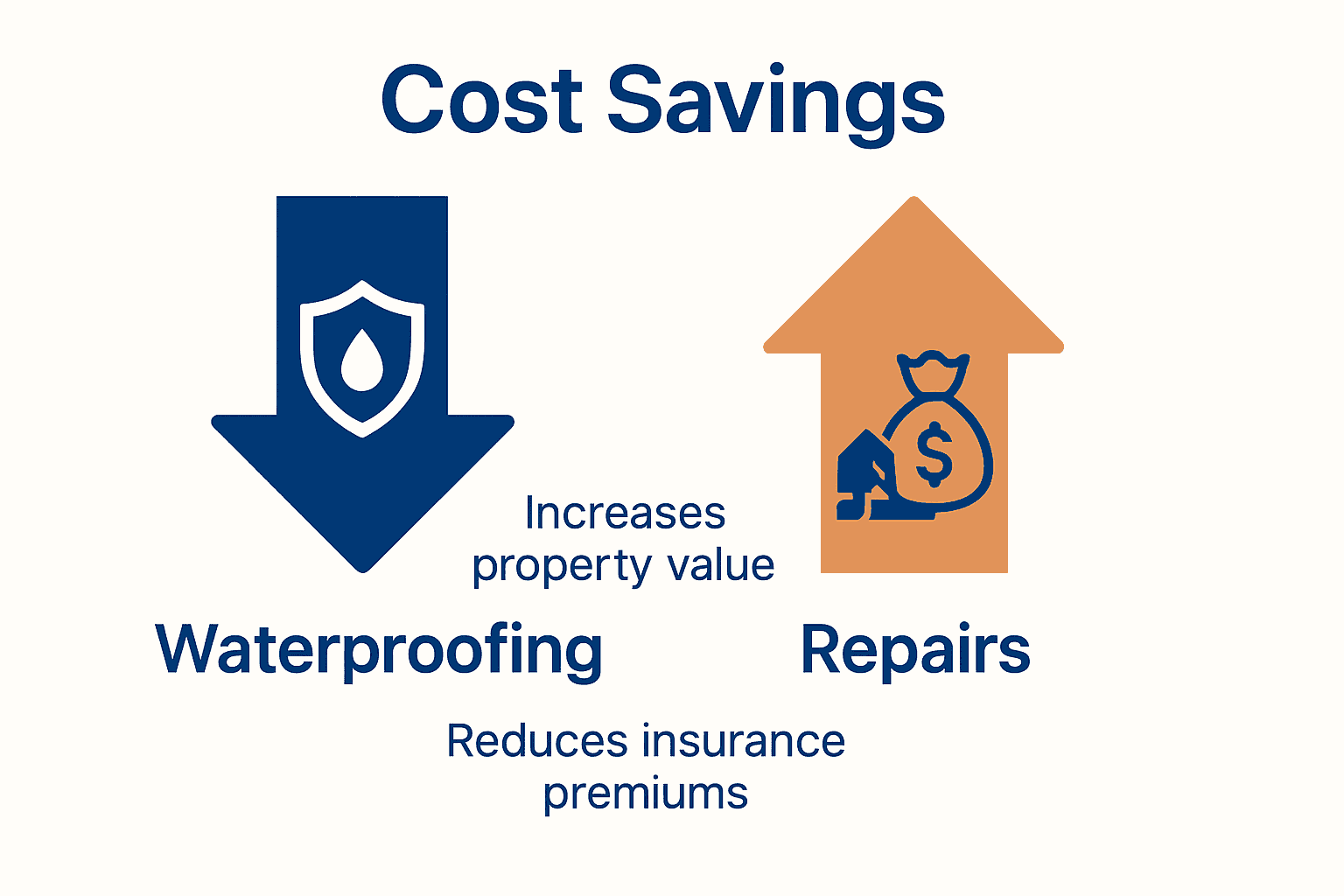
- Increased property market value through demonstrable structural protection
- Reduced long-term maintenance expenses by preventing progressive damage
- Lower insurance premiums resulting from minimised structural risk
- Enhanced energy efficiency by preventing moisture-related insulation degradation
- Potential tax benefits for property improvements that increase structural resilience
For property owners seeking comprehensive insights into maximising their investment, understanding the benefits of basement waterproofing provides critical guidance on making informed waterproofing decisions.
Secure Your Property with Expert Basement Waterproofing Solutions
Basement waterproofing is critical for protecting your property from costly structural damage and mould growth caused by moisture infiltration. This complete guide highlights key challenges such as foundation weakening, interior flooding, and rising maintenance expenses. If you want to preserve your investment and strengthen your home or commercial building against damp and water damage, understanding and applying the right waterproofing techniques is essential.
Take control of your property’s durability by exploring professional advice and solutions tailored to your needs in the Uncategorized – Pro Waterproofing section.
Act now to prevent irreversible damage and costly repairs. Visit us at https://prowaterproofing.co.za to access expert articles, compare service providers, and request a personalised quote. Your property deserves the best waterproofing protection available today.
Frequently Asked Questions
What is basement waterproofing?
Basement waterproofing is a comprehensive strategy designed to protect subterranean structures from moisture intrusion and potential structural damage, involving various techniques to prevent water penetration.
What are the main benefits of basement waterproofing?
The main benefits include maintaining structural integrity, preserving property value, reducing long-term repair costs, preventing mould growth, and protecting interior finishes from water damage.
What types of waterproofing solutions are available for basements?
Available solutions include cementitious coatings, liquid-applied membranes, bituminous coatings, polyurethane waterproofing, and interior drainage systems, each addressing different moisture challenges.
How does basement waterproofing impact property value?
Properly waterproofed basements can increase property market value as potential buyers often prefer homes with effective moisture protection, while unaddressed water issues can lead to significant repair costs and lower market value.